From Racetrack to Baseline: Merging Equine Ground Data with Tennis Court Shifts to Identify Live Value
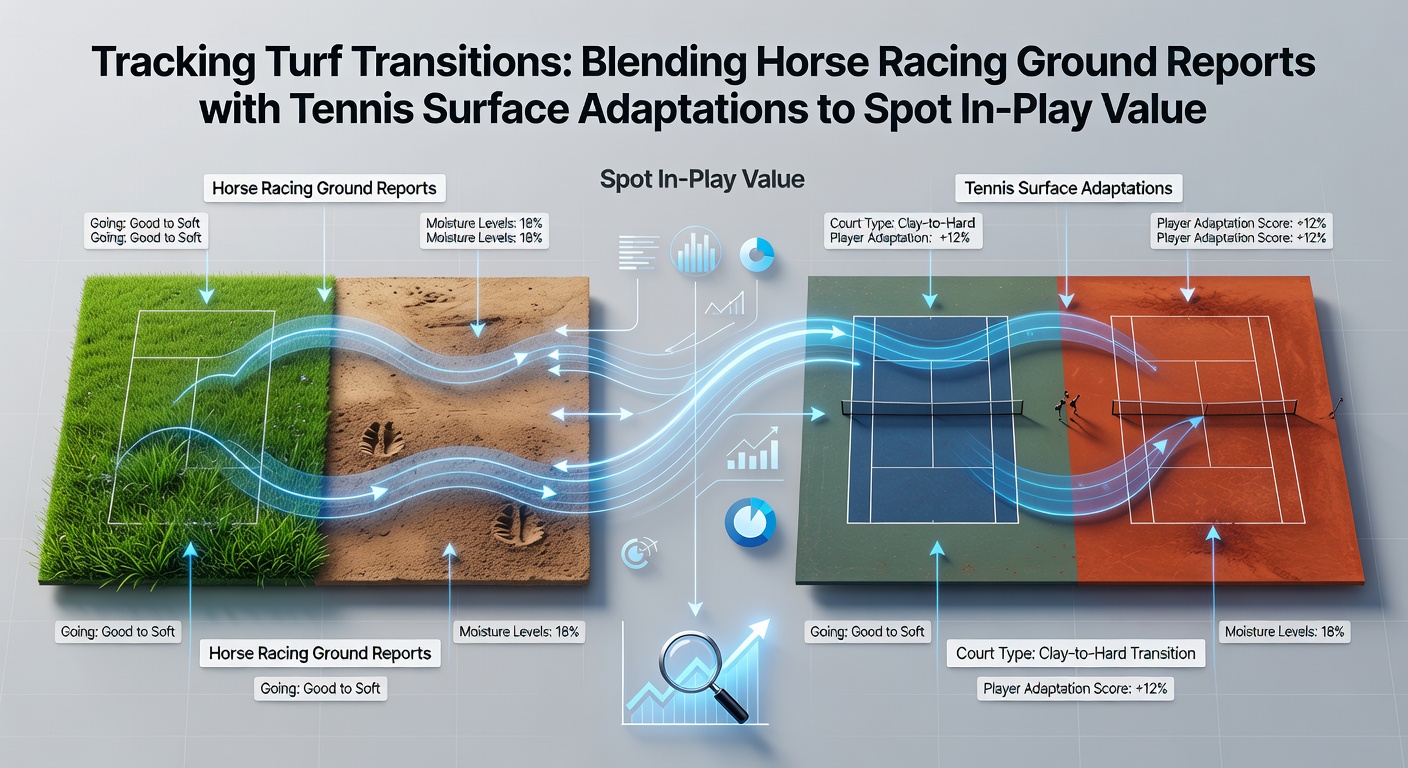
Ground reports from horse racing meetings supply detailed assessments of turf firmness, moisture levels, and track bias while tennis surface data records similar variables on grass, clay, and hard courts; analysts combine these datasets because both domains feature athletes whose performance curves respond directly to footing changes, and in-play markets adjust odds as those responses unfold during races or matches. Researchers at institutions tracking equine biomechanics have documented how stride length shortens on softer going, while parallel studies from sports science groups show tennis players alter footwork patterns on slower clay compared with faster grass, creating measurable shifts in point-win percentages that betting platforms price in real time.
Core Elements of Racing Ground Reports
Official clerks of the course publish going descriptions each morning that classify turf as heavy, soft, good to soft, good, good to firm, or firm, and these classifications correlate with historical speed ratings because horses exert different energy outputs depending on penetration depth; data compiled by racing authorities indicate that favorites win at higher rates on good ground whereas outsiders improve when conditions turn softer because stamina becomes the deciding factor. Observers note that jockeys adjust riding tactics within the first furlong once they feel the surface, and those adjustments often appear in sectional timing splits published by organizations such as the Australian Racing Board, allowing bettors to update projections before the final stages of longer races.
Tennis Surface Characteristics and Player Responses
Tennis governing bodies publish court speed ratings and bounce coefficients that quantify how quickly the ball leaves the surface, and players adapt foot speed plus swing timing accordingly; on high-bounce clay, baseline rallies lengthen while serve-volley approaches decline, patterns confirmed by match statistics released through the International Tennis Federation. When courts are resurfaced mid-tournament or weather alters grip, in-play models recalculate expected hold percentages, and those recalculations frequently produce value because bookmakers update lines after several games rather than instantaneously.
Combining the Two Datasets for In-Play Detection
Analysts overlay equine ground metrics with tennis surface profiles because both sets of numbers describe friction, energy return, and fatigue accumulation; a horse racing on drying ground after overnight rain exhibits stride recovery similar to a tennis player moving from indoor hard court to outdoor grass where footing firms. Software platforms that ingest live weather feeds, historical speed figures, and real-time point data can flag discrepancies between expected and observed performance within the first set or the first two furlongs, and those discrepancies often precede market corrections. In May 2026 several European tournaments reported clay moisture readings that shifted mid-afternoon, mirroring conditions seen at certain British racecourses earlier the same week, and cross-referenced models highlighted in-play opportunities on both sports simultaneously.
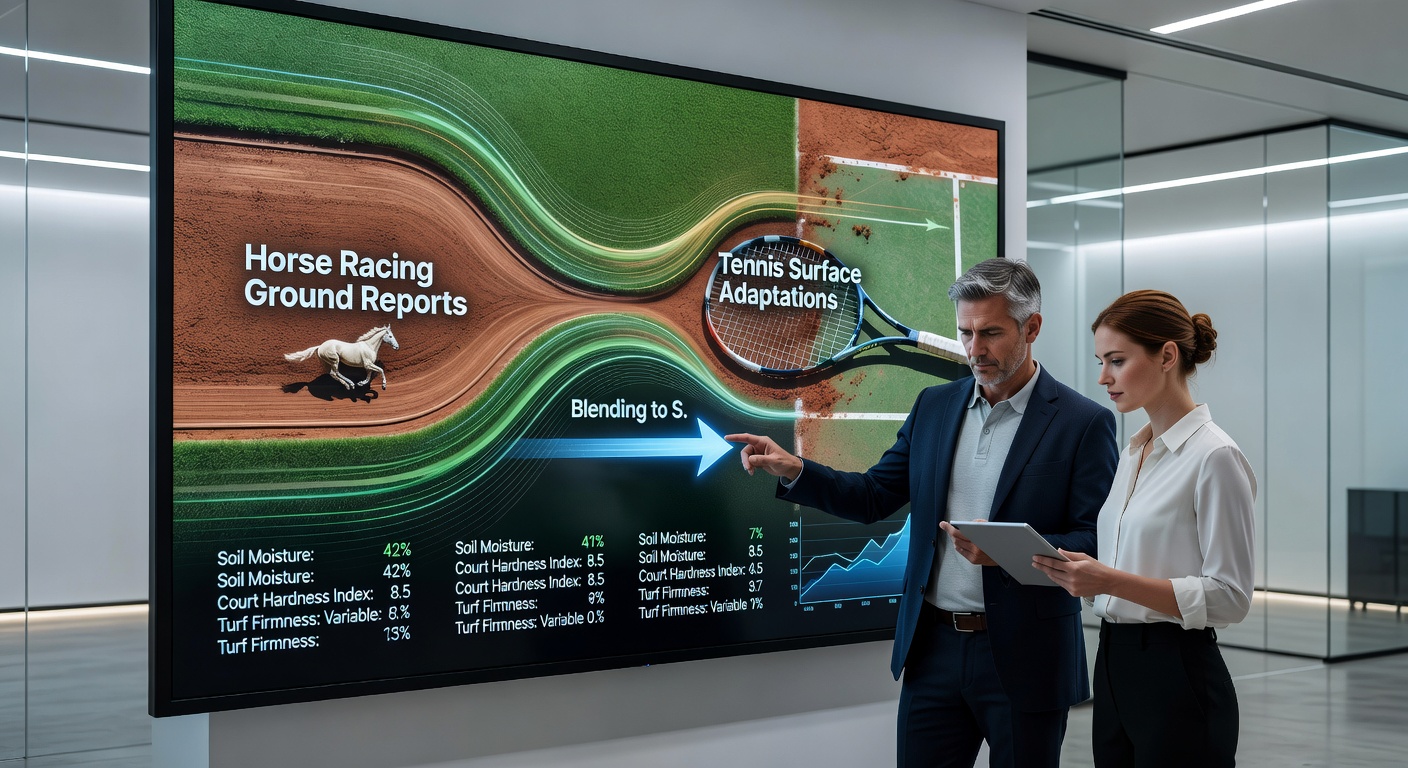
One documented workflow begins with pre-event ground declarations, proceeds through live sectional updates, and finishes with surface-adjusted probability models that feed directly into exchange order books; when a clay court slows further because of rising humidity, servers lose first-strike advantage in patterns comparable to sprinters losing breaks on rain-softened turf. Platforms that automate this overlay reduce latency between observation and bet placement, and industry reports from the Canadian Pari-Mutuel Agency note increased handle on live markets once such tools became available to professional syndicates.
Practical Monitoring Techniques
Traders track multiple indicators at once: radar rainfall totals for racing venues, infrared court temperature readings for tennis stadiums, and historical win percentages conditioned on those exact readings. They then compare current match or race fractions against baseline expectations derived from the blended surface model; deviations beyond one standard deviation frequently trigger position entries because markets require several data points before repricing. A case from a combined racing and tennis festival weekend showed a grass-court match extending into longer rallies after light drizzle while a nearby flat race on good to soft ground produced slower early fractions, and both outcomes aligned with the same surface-adjusted projections released an hour earlier.
Conclusion
Data integration between horse racing ground reports and tennis surface measurements supplies a consistent framework for spotting in-play discrepancies, because both sports translate footing variables into performance outputs that markets eventually reflect. Continued collection of granular metrics from official sources, combined with faster processing pipelines, allows observers to monitor transitions across venues and time zones without relying on single-sport intuition alone.