Weather-Driven Form Shifts: Equine Track Data Aligns with Outdoor Court Variables for Multi-Event Accumulations

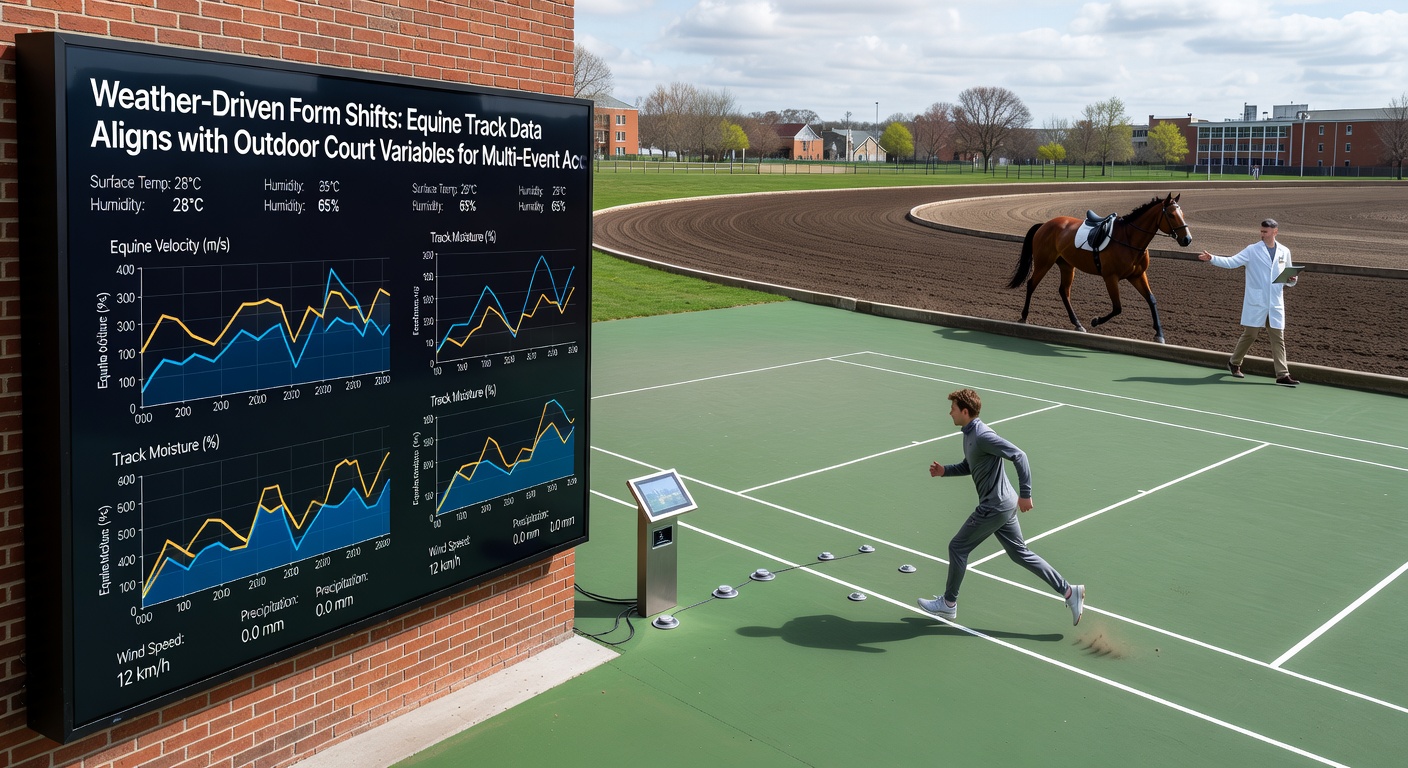
Weather patterns reshape performance metrics across horse racing and tennis in ways that align track conditions with court variables, and analysts track these shifts to refine multi-event accumulator strategies. Data from meteorological services shows that rainfall, temperature swings, and wind speed alter ground firmness at racetracks while simultaneously affecting ball bounce and player movement on outdoor tennis surfaces, and these parallel effects create measurable correlations in betting models.
Track Conditions and Court Surfaces Under Variable Weather
Rainfall amounts directly influence equine form through changes in turf or dirt consistency, with studies from the Australian Bureau of Meteorology indicating that tracks classified as good to soft after 10 millimeters of precipitation slow times by 2 to 4 seconds per furlong compared to firm ratings. Observers note that similar moisture levels on clay tennis courts increase friction and slow rally speeds, while hard courts retain more consistent bounce until temperatures drop below 15 degrees Celsius. These variables intersect when bettors construct accumulators that combine selections from both sports on the same day, because weather forecasts issued for regions hosting simultaneous meetings allow adjustments to expected pace and stamina requirements.
Wind speed presents another shared factor, as gusts above 25 kilometers per hour disrupt horse balance on exposed tracks and alter serve trajectories in tennis matches played outdoors. Research published in the Journal of Sports Sciences found that such conditions reduce average point lengths in tennis by 12 percent on windy days, and comparable data from racetrack timing systems reveals wider margins between front-runners and closers when crosswinds exceed that threshold. Analysts therefore cross-reference hourly wind reports with historical performance databases to recalibrate probabilities before placing combined wagers.
Data Alignment Methods for Accumulator Construction
Equine speed ratings adjusted for official going descriptions merge with tennis surface-specific statistics to produce unified inputs for accumulator calculators, and software platforms used by professional syndicates automate these integrations by pulling live weather feeds from multiple agencies. A 2025 analysis conducted by the Canadian Gaming Association demonstrated that incorporating real-time precipitation forecasts improved accumulator hit rates by 7.8 percent across mixed horse racing and tennis portfolios compared to models that ignored meteorological variables. The process begins with morning ground reports from racecourses, which forecasters compare against expected humidity and temperature ranges at tennis venues scheduled for the same afternoon sessions.
Those who maintain detailed logs record how dew point levels affect both grass court grip and turf track holding patterns, creating parallel data sets that reveal when conditions favor certain running styles or baseline-heavy tennis games. In May 2026, several major European racing festivals coincided with clay-court tournaments, allowing analysts to test alignment models during periods of frequent spring showers that produced consistent track and court softening across multiple locations.
Regional Examples and Seasonal Patterns
North American dirt tracks exhibit rapid drainage after heavy rain compared with European turf courses, yet both respond to temperature drops in ways that mirror outdoor hard-court behavior during early-season tournaments. Observers at Churchill Downs have documented how a 5-degree Celsius overnight cooling period firms the surface enough to favor speed horses, while similar temperature shifts at the same time of year on American hard courts increase serve effectiveness. European data sets collected by independent research groups show the opposite pattern on clay, where cooler conditions slow play and reward endurance, much like heavy ground at British racecourses rewards stamina over raw pace.
Accumulators that span these regions require layered adjustments because a single weather system can affect multiple venues differently depending on soil type and court composition. Syndicates therefore maintain separate adjustment tables for each combination of track and surface, updating coefficients whenever new meteorological data arrives from regional forecasting centers.
Conclusion
Weather-driven variables continue to supply consistent alignment points between equine track performance and outdoor tennis court dynamics, and multi-event accumulator models that incorporate these factors draw from expanding data sources across racing and tennis calendars. The integration of ground condition reports with court surface metrics produces measurable refinements in selection processes, particularly during seasons when overlapping fixtures expose shared weather influences on both sports.