Weather Patterns Reshaping Track Surfaces and Tennis Courts in Multi-Sport Contexts
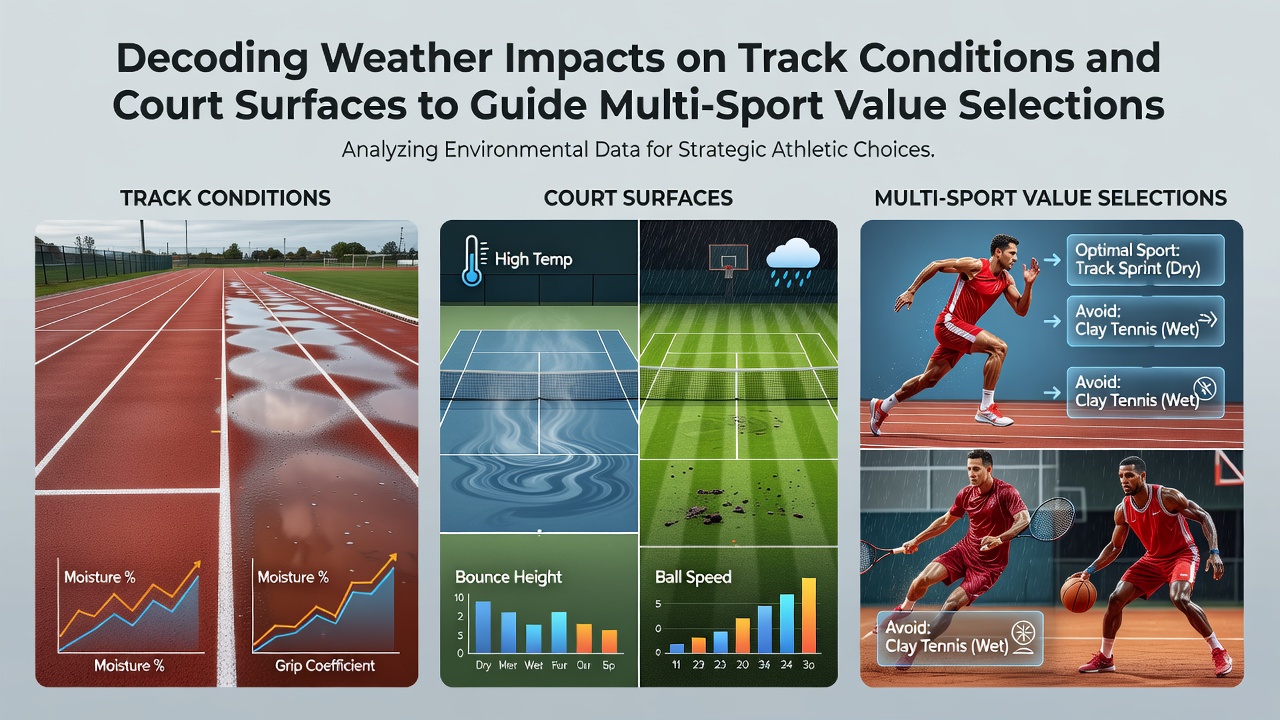
Weather exerts direct influence on athletic surfaces, altering traction, speed, and consistency across horse racing tracks and tennis courts in measurable ways. Data from meteorological services demonstrate that precipitation levels, temperature fluctuations, and wind patterns modify ground conditions, which in turn affect performance metrics recorded during events. Researchers at institutions such as the Australian Bureau of Meteorology have documented these variables through long-term monitoring of outdoor sports venues.
Precipitation Effects on Turf and Clay Surfaces
Rainfall saturates soil layers beneath turf tracks, increasing moisture content and reducing firmness, which leads to slower race times as horses expend additional energy navigating softer ground. Studies conducted by the United States Department of Agriculture show that turf tracks absorb between 15 and 40 millimeters of rain before visible changes in going description occur, shifting classifications from firm to good or soft. Clay tennis courts respond similarly, with water retention creating heavier ball response and reduced bounce height, while drainage systems on professional courts mitigate but do not eliminate these shifts. Observers note that events scheduled during periods of intermittent showers require surface assessments multiple times daily to capture evolving conditions accurately.
Temperature Influences on Hard Courts and Synthetic Tracks
Ambient temperatures modify the resilience of hard court materials and synthetic racing surfaces, expanding or contracting base layers and altering friction coefficients. According to research published through the National Oceanic and Atmospheric Administration, surfaces reach peak temperatures 10 to 15 degrees Celsius above air readings under direct sunlight, which accelerates ball speed on tennis courts and reduces grip on certain track materials. In June 2026, several North American venues recorded sustained heatwaves exceeding 32 degrees Celsius, prompting adjustments in maintenance routines that included additional watering cycles to stabilize surface temperatures. Those who monitor these environments record corresponding changes in average rally lengths and stride patterns during competitive play.
Wind and Humidity Interactions Across Venues
Wind speed and direction introduce variability in ball trajectory on exposed tennis courts while simultaneously drying or compacting track surfaces depending on velocity and duration. Humidity compounds these effects by slowing evaporation rates, leaving residual moisture that influences both horse footing and racket spin potential. Figures released by Environment and Climate Change Canada indicate that coastal racing facilities experience wind gusts averaging 25 kilometers per hour during summer months, correlating with documented adjustments in stride frequency among competing animals. Multi-sport calendars that combine racing and tennis scheduling must account for overlapping regional forecasts to anticipate simultaneous surface changes at geographically separated sites.
Regional Climate Variations and Seasonal Patterns
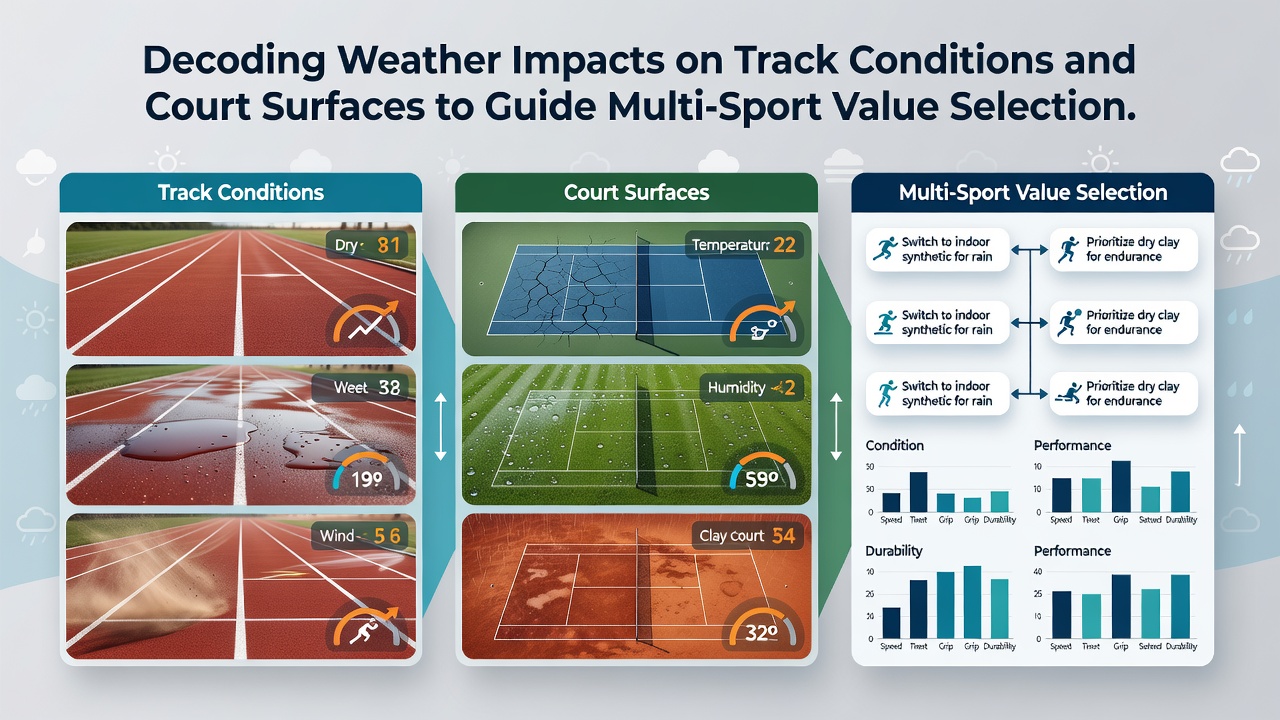
Geographic location dictates baseline responses to weather events, with European grass courts exhibiting faster drainage compared to Australian hard courts under identical rainfall volumes. Data compiled by the World Meteorological Organization highlight that venues in temperate zones encounter more frequent freeze-thaw cycles during shoulder seasons, creating micro-fractures in court surfaces that affect consistency over successive matches. Racing circuits operating across multiple continents integrate these regional profiles into preparation protocols, adjusting equipment and training regimens accordingly. Those tracking long-term records observe that June periods often coincide with transitional weather fronts in the northern hemisphere, producing mixed precipitation types that challenge uniform surface management strategies.
Integrated analysis of weather data alongside surface performance statistics allows for refined modeling of expected conditions across concurrent events. Academic papers from sports science departments at universities in multiple countries demonstrate correlations between forecast accuracy and outcome predictability when surface variables receive explicit inclusion. Industry reports from organizations focused on outdoor facility maintenance emphasize proactive monitoring systems that combine on-site sensors with satellite imagery to deliver real-time updates. Such approaches support selections across racing and tennis disciplines by providing objective inputs derived from measurable environmental factors rather than generalized assumptions.
Conclusion
Weather continues to function as a primary determinant of surface behavior in both horse racing and tennis environments, with quantifiable impacts documented through sustained observation and data collection. Continued refinement of predictive tools and maintenance techniques enables more precise anticipation of condition changes, supporting informed approaches to multi-sport scheduling and preparation across diverse geographic regions.